
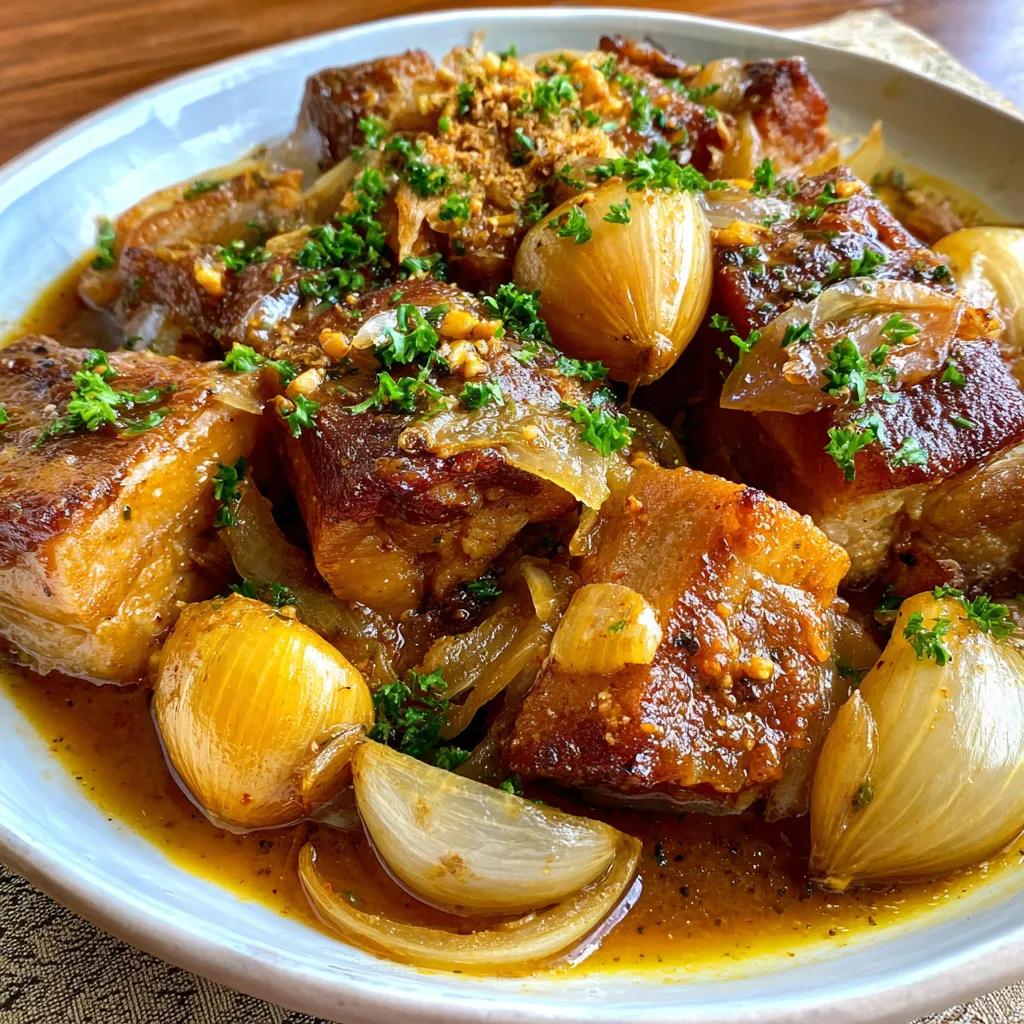
Sink your fork into tender pork shoulder braised with garlic, onions, and a rich pan sauce that glistens in every bite. Caramelized onions and whole garlic cloves mingle with dry white wine, soy sauce, and a hint of smoked paprika to create a melt-in-your-mouth dinner that feels like comfort food at its finest. Brightened with fresh parsley, this recipe invites you to cozy up, dig in, and share the love one succulent piece at a time.
To bring this garlicky, onion-packed masterpiece to life, a handful of quality ingredients work in harmony. Here’s what you’ll need:
This section walks you through crafting succulent, fall-apart pork with a glossy, flavorful sauce. You’ll start by building layers of taste through searing, sautéing, deglazing, and finally slow‐braising until every piece of meat is tender and infused with the savory pan juices.
1. Begin by seasoning the pork shoulder chunks generously with salt and pepper on all sides, then pat the meat dry to ensure a perfect sear.
2. In a large, heavy-bottomed pot or Dutch oven, heat the olive oil over medium-high heat. Once shimmering, add the pork in batches—don’t overcrowd—and sear each piece for 3–4 minutes per side until deeply browned. Remove and set aside.
3. In the same pot, add the sliced onions and garlic cloves. Sauté for 5–7 minutes, stirring frequently, until the onions soften and start to caramelize, and the garlic becomes fragrant.
4. Pour in the dry white wine, using a wooden spoon to scrape up any flavorful fond from the bottom. Let the wine simmer for 2–3 minutes to reduce slightly.
5. Stir in the chicken broth, soy sauce, brown sugar, dried thyme, and smoked paprika. Bring the mixture to a gentle boil.
6. Return the seared pork to the pot, nestling the pieces so they are mostly submerged in the liquid.
7. Reduce heat to low, cover the pot, and let it braise for 2 to 2½ hours, or until the pork is fork-tender. Stir occasionally and add more broth if needed to keep the meat from drying.
8. Once tender, use tongs to transfer the pork to a cutting board. Let it rest for a few minutes before slicing or shredding.
9. Meanwhile, increase heat to medium-high and let the braising liquid reduce for 5–10 minutes until slightly thickened. Taste and adjust seasoning with salt and pepper.
10. Serve the sliced or shredded pork drizzled with the rich sauce and garnished with fresh parsley.
When it comes to enjoying this flavorful braised pork, think about vessels that soak up every drop of that garlic-onion sauce. Whether you plate it over a comforting starch or wrap it for a casual feast, these ideas will turn dinner into a celebration.
Unlock the full potential of this dish with a few insider tricks. From side pairings to prep shortcuts, these pointers will help you nail the recipe every time.
Proper storage ensures your braised pork stays as delicious on day two as it was on day one. Follow these methods to lock in freshness and flavor.
Got a burning question? Here are some quick answers to the most common queries about this braised pork.
From seasoning the pork and searing through to the final sauce reduction, plan on about 2½ to 3 hours. Searing the pork and sautéing the onions and garlic takes roughly 15 minutes, deglazing and building the braising liquid about 5 minutes, then 2 to 2½ hours of gentle braising, plus an optional 5–10 minutes to thicken the sauce at the end.
Yes. If you prefer not to cook with alcohol, replace the 1 cup of dry white wine with an additional cup of low-sodium chicken broth mixed with 1 tablespoon of white wine vinegar or apple cider vinegar. This maintains the acidity and depth without alcohol.
Cool the pork and sauce completely, then transfer to an airtight container. Refrigerate for up to 4 days or freeze for up to 3 months. Reheat gently on the stovetop over low heat, adding a splash of broth if needed to loosen the sauce, or microwave in short bursts, stirring in between.
Keep the heat at medium to medium-high and stir frequently so the onions soften evenly. If the garlic browns too quickly, push the onions to the side of the pot, add the garlic briefly, then fold it into the onions. If needed, lower the heat slightly and add a teaspoon of water to prevent sticking.
Yes. Carrots and celery can be added when you sauté the onions and garlic. Cut carrots into 1-inch pieces and celery into similar sizes. They’ll soften and develop flavor alongside the meat without adding more braising time. Just ensure the pot isn’t overcrowded so the pork still browns properly.
Remove the pork, increase heat to medium-high, and let the liquid simmer uncovered until it reduces by about one-quarter to one-third, usually 5–10 minutes. For extra silkiness, you can whisk in a tablespoon of cold butter at the end. If you need a quicker fix, mix 1 teaspoon cornstarch with 1 tablespoon cold water, then stir into the simmering sauce until thickened.
Mashed potatoes, creamy polenta, steamed rice, or crusty bread all soak up the rich sauce beautifully. For a special touch, top the pork with a spoonful of caramelized onions, a sprinkle of toasted pine nuts, and extra chopped parsley. A crisp green salad with a lemon vinaigrette balances the richness.
This braised pork recipe works because it combines simple ingredients in layers of technique—searing to lock in juices, caramelizing onions and garlic for sweetness, deglazing with wine for acidity, and slow-braising to achieve melt-in-your-mouth tenderness. The final sauce, glossy and rich, carries a perfect balance of sweet, salty, and smoky notes, brightened by fresh parsley. It’s the ultimate comfort food that feels impressive but is surprisingly easy. Feel free to print this article and save it for later—then let me know in the comments if you have questions or feedback when you give it a try!
Tender pork chunks seared golden, then braised with caramelized onions, garlic, white wine and spices until melt-in-your-mouth soft. The sauce reduces to a glossy finish and the dish is brightened with fresh parsley.

Hi! I’m Max Turner, the recipe hacker, flavor hunter, and home-cook behind RecipesAsSeen.com. Like most guys, I’ve lost count of how many times I’ve seen a mouthwatering recipe on TV, TikTok, or YouTube and thought, “Is that even legit?” That curiosity (and hunger) turned into this blog.