

There’s something uniquely inviting about a bowl of warm pasta that feels like a cozy hug on a chilly evening. In this rendition, tender roasted butternut squash meets the nutty, savory tang of Parmesan, while crispy sage leaves shimmer in a pool of golden brown butter. Every twirl of fettuccine or pappardelle is an invitation to savor layers of flavor that dance between sweet squash, earthy herbs, and a whisper of heat from red pepper flakes. It’s the kind of dish that bridges the gap between simple comfort food and an elegant autumnal celebration on your dinner table. With each bite, the squash’s natural sweetness, enhanced by gentle roasting, melds seamlessly with the rich, buttery sage infusion. A hint of freshly grated nutmeg lingers on the palate, elevating this into a memorable, restaurant-worthy experience you can easily recreate at home.
When that first forkful hits your lips, you’ll understand why this recipe has become a go-to for both weeknight dinners and intimate Sunday suppers. Picture setting down at the table as the steam rises, carrying that warm, hearty scent right to your nose—except without actually saying “picture,” since the real magic happens when you dive in. It’s a recipe born from experimentation, a playful afternoon spent combining pantry staples and seasonal produce, and it emerged as a shining star among a sea of weeknight options. Share it with friends or keep it all to yourself; either way, this Butternut Squash & Sage Pasta is destined to become a cherished part of your recipe collection. It pairs beautifully with a simple green salad or a crisp glass of white wine, making it an effortlessly impressive dish for any gathering.
KEY INGREDIENTS IN BUTTERNUT SQUASH & SAGE PASTA
This recipe transforms humble ingredients into something truly special. From the sweet, velvety squash to the fragrant sage, each component plays a crucial role in building flavor, texture, and aroma. Below are the star players that make this dish shine.
- Butternut Squash
Provides a creamy sweetness and hearty texture once roasted. Its natural sugars caramelize in the oven, creating rich, complex flavors that form the base of this sauce.
- Olive Oil
Helps roast the squash evenly and promotes caramelization. A good-quality extra-virgin olive oil adds a subtle fruitiness that complements the dish’s autumnal vibe.
- Salt and Black Pepper
Essential seasonings to enhance each element’s natural flavors. The right amount of salt balances the sweetness of the squash, while freshly ground black pepper adds a touch of sharpness.
- Pasta (Fettuccine or Pappardelle)
Holds the sauce beautifully with its wide, flat shape. The ribbons of pasta provide the perfect canvas for each coating of roasted squash and brown butter.
- Unsalted Butter
Melted and browned creates a nutty, luxurious sauce. Start with unsalted butter so you can control the seasoning precisely.
- Fresh Sage Leaves
Crisp up in brown butter to yield an intensely herbaceous crunch. Sage’s earthy aroma is a cornerstone of this dish’s identity.
- Grated Parmesan Cheese
Offers a salty, nutty depth that binds the sauce together. The cheese melts into the pasta, contributing to a creamy finish.
- Red Pepper Flakes (Optional)
Adds a gentle kick without overwhelming the other flavors. A small pinch introduces warmth and balance.
- Pasta Cooking Water
Starchy liquid that brings the sauce to life, helping it cling to each strand of pasta. It ensures a silky, cohesive texture.
- Toasted Pine Nuts (Optional)
Provide an extra layer of crunch and a subtle, buttery nut flavor. They make a delightful garnish that enhances both texture and taste.
- Freshly Grated Nutmeg
A finishing touch that adds warmth and complexity. Nutmeg’s sweet-spicy notes elevate the overall flavor profile.
HOW TO MAKE BUTTERNUT SQUASH & SAGE PASTA
Let’s dive into the kitchen and bring these ingredients together into a soul-warming meal. Follow each step carefully to layer flavors and textures, from tender roasted squash to the crisp sage leaves that finish off this dish.
1. Preheat the oven to 400°F (200°C) and line a baking sheet with parchment paper. This ensures the squash roasts evenly without sticking and makes cleanup a breeze.
2. In a medium bowl, toss the diced butternut squash with olive oil, salt, and pepper until each piece is coated. Spread the squash in a single layer on the prepared baking sheet for even caramelization.
3. Roast the squash for 25–30 minutes, stirring halfway through to achieve an even, golden-brown color. You’re looking for pieces that are tender inside with slightly crisp, caramelized edges.
4. While the squash is in the oven, bring a large pot of salted water to a rolling boil. Cook the pasta until al dente, following the package instructions. Before draining, reserve 1/4 cup of the pasta cooking water to help bind the sauce later.
5. In a large skillet over medium heat, melt the butter. Once foaming, add the sage leaves and let them fry until they become crisp and the butter turns golden brown, about 2–3 minutes. Carefully remove the leaves to a paper towel-lined plate to drain.
6. Add the roasted butternut squash to the skillet with the brown butter. Stir gently to coat each piece in that nutty, fragrant sauce.
7. Add the cooked pasta to the skillet, along with the reserved pasta water. Toss everything together, ensuring every ribbon of pasta is slicked with the buttery squash mixture.
8. Stir in the grated Parmesan and red pepper flakes if using. Grate a little fresh nutmeg over the top, then season with additional salt and pepper to taste.
9. Serve hot, garnished with the crispy sage leaves, toasted pine nuts, and extra Parmesan if you’d like a cheesier finish.
SERVING SUGGESTIONS FOR BUTTERNUT SQUASH & SAGE PASTA
After pouring your beautiful pasta into bowls, think about how you can elevate the presentation and flavors even further. Whether you’re sharing this with family or treating yourself to a gourmet solo meal, these serving ideas will help you make the most of every comforting bite.
- Rustic Family Style
Serve the pasta in a large shallow bowl or wooden platter so everyone can dig in. Arrange the crispy sage leaves on top for visual contrast, and sprinkle toasted pine nuts around the edges. Provide extra Parmesan at the table in a small dish marked “grate as you please.”
- Elegant Individual Portions
Twirl a small nest of pasta with tongs onto each plate, positioning it neatly in the center. Spoon a bit of the buttery squash atop the pasta, place two or three sage leaves as a delicate accent, and drizzle any leftover brown butter around the rim for an upscale restaurant feel.
- Paired with a Crisp Salad
Balance the richness of the pasta with a light green salad dressed simply with lemon juice, olive oil, salt, and pepper. Arugula or mixed baby greens complement the dish’s warm spices and cut through the buttery notes, creating a refreshing counterpoint.
- Wine Pairing
Choose a glass of dry white wine like Sauvignon Blanc or a light Chardonnay. The wine’s acidity will cleanse the palate between bites, highlighting the sweetness of the squash and the aromatic qualities of the sage.
HOW TO STORE BUTTERNUT SQUASH & SAGE PASTA
Leftovers never tasted so good, and with the right approach, you can preserve the flavors of this pasta for days. Proper storage ensures you retain that buttery sauce, the squash’s sweetness, and the sage’s crispness.
- Store in an Airtight Container
Transfer cooled pasta into a container with a snug-fitting lid. Press a piece of plastic wrap directly onto the surface of the pasta before sealing to minimize air exposure and prevent drying out.
- Refrigeration
Keep the container in the coldest part of the fridge, not in the door. This maintains a consistent temperature around 35–40°F (2–4°C). Consume within 3–4 days for optimal taste and safety.
- Freezing for Longer Storage
If you plan to keep it longer, freeze the portions in individual freezer-safe bags. Press out excess air and label with the date. Stored this way, the pasta can last up to 2 months without significant loss of flavor.
- Reheating Tips
Gently reheat in a skillet over low heat, adding a splash of water or extra pasta cooking water to revive the sauce’s creaminess. Avoid the microwave if possible, as it can create uneven heat and soften the squash too much. Top with fresh sage or pine nuts after warming.
CONCLUSION
From the first forkful of sweet, roasted squash to the final hint of nutmeg on your palate, this Butternut Squash & Sage Pasta stands out as both a comforting weeknight meal and an impressive dish for special occasions. We’ve walked through each step, from gathering the vibrant ingredients to mastering the art of browning butter and crisping sage. The combination of tender pasta, caramelized squash, and aromatic sage leaves creates a dish that’s as visually appealing as it is delicious. Whether you’re a beginner in the kitchen or a seasoned home cook, this recipe delivers consistent, satisfying results that highlight the best flavors of the season. Don’t forget to gather the Parmesan, pine nuts, and red pepper flakes for finishing touches that make every bite shine.
Feel free to print this article and save it in your favorite recipe binder or digital collection. You’ll also find a FAQ below to answer any lingering questions about ingredient swaps, storage, and variations—so you can dive right in with confidence. If you give this recipe a try, we’d love to hear about your experience. Leave a comment, share your tips or twist, and let us know if you need any help bringing these autumn flavors to your table. Your feedback and questions are always welcome, and they help make our cooking community stronger and more inspired. Enjoy every forkful!
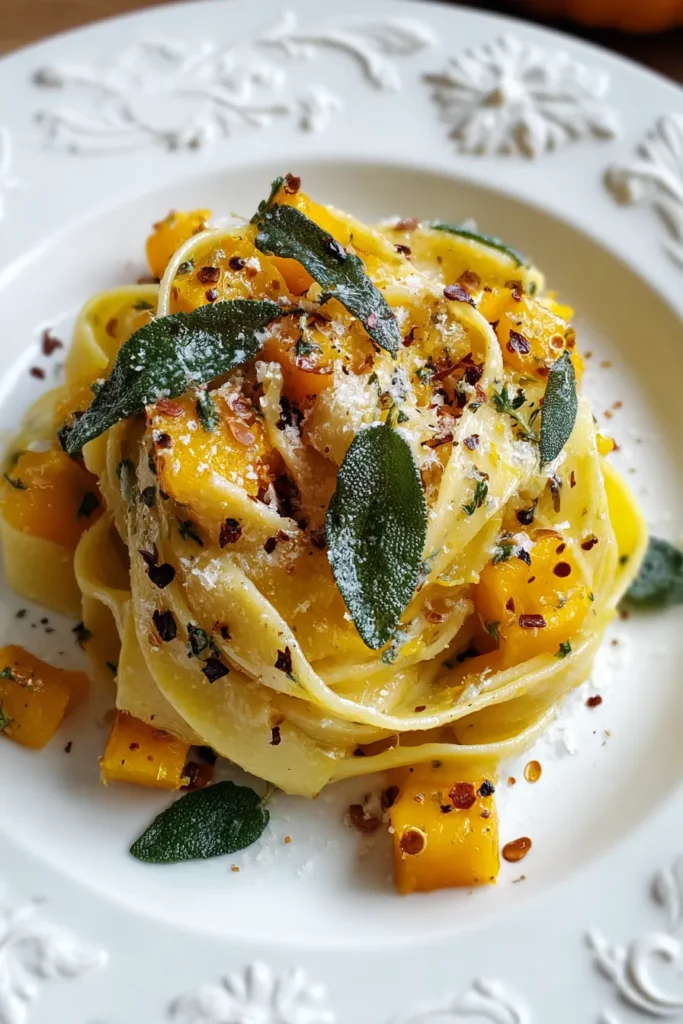

Butternut Squash & Sage Pasta
Description
Experience the warm, comforting taste of roasted butternut squash paired with crispy sage and nutty Parmesan in this easy, mouthwatering pasta dish.
Ingredients
Instructions
-
Preheat the oven to 400°F (200°C). Line a baking sheet with parchment paper.
-
Toss the diced butternut squash with olive oil, salt, and pepper. Spread the squash in a single layer on the prepared baking sheet.
-
Roast the squash in the preheated oven for about 25-30 minutes, or until tender and slightly caramelized, stirring halfway through.
-
While the squash is roasting, bring a large pot of salted water to a boil. Cook the pasta according to package instructions until al dente. Reserve 1/4 cup of pasta water and then drain.
-
In a large skillet over medium heat, melt the butter. Add the sage leaves and cook until the butter turns golden brown and the sage leaves become crispy, about 2-3 minutes. Remove the sage leaves and set aside on a paper towel.
-
Add the roasted butternut squash to the skillet with the brown butter. Stir to coat the squash.
-
Add the cooked pasta to the skillet along with the reserved pasta water. Toss everything together until well combined.
-
Stir in the grated Parmesan cheese and red pepper flakes if using. Adjust seasoning with salt, pepper, and freshly grated nutmeg.
-
Serve the pasta hot, garnished with crispy sage leaves, toasted pine nuts, and additional Parmesan if desired.
Note
- Sage leaves bring a robust flavor, making them a key component in this dish.
- Roasting the butternut squash enhances its natural sweetness and adds depth of flavor.
- You can substitute pine nuts with walnuts or omit them if you prefer a nut-free version.
- Adding a pinch of red pepper flakes gives the dish a subtle kick without overpowering the other flavors.
- For a creamier sauce, you can add a splash of cream or a tablespoon of mascarpone cheese.