

The vibrant colors of Ensalada de San Isidro greet the table like a fiesta of fresh produce and creamy textures. Every time I toss together this Spanish salad, memories of strolling through sun-drenched plazas in Madrid come rushing back. The tender potatoes nestled alongside bright orange carrot ribbons, emerald peas peeking through layers of sliced eggs and olives—each spoonful tells a story of community gatherings, laughter echoing through streets during the festival of San Isidro. Growing up, I saw families passing bowls of this spring salad from person to person, sharing stories under blooming chestnut trees. Making this recipe at home gives me the same sense of connection, even if I’m miles away from the lively streets of Spain. It’s a dish that celebrates simple ingredients elevated by fresh seasoning and high-quality olive oil. The subtle creaminess of mayonnaise combined with the salinity of tuna in olive oil creates a harmony that dances on your taste buds. It’s that first bite, where crisp meets creamy, that always makes me smile.
Beyond the textures and hues, Ensalada de San Isidro brings an energy that reminds me why I fell in love with cooking for friends and family. Last spring, I hosted an impromptu picnic in my backyard, complete with checkered blankets and a pitcher of sangría, and the centerpiece was this festive dish. Watching guests scoop generous helpings, eyes lighting up as they tasted the sweet crunch of carrots contrasted with tender potatoes—those moments of shared delight are what home cooking is all about. I often encourage people to customize this Spanish salad to their own tastes: swapping olives, adding sweet corn, or even lightening things up with Greek yogurt in place of some mayonnaise. No matter the tweak, it holds its festive spirit and bursts with freshness. It’s beginner-friendly, yet it feels like a professional creation when plated. From appetizers to light lunches, this healthy salad never fails to steal the show—and reminds me that a simple recipe can become a beloved tradition.
KEY INGREDIENTS IN ENSALADA DE SAN ISIDRO
Before diving into the step-by-step magic of this spring salad, let’s take a look at the stars of the show. These key ingredients each play a vital role in creating the perfect balance of textures and flavors that make Ensalada de San Isidro such a festive and satisfying dish.
- Potatoes: They offer a hearty, creamy base that holds the salad together, adding a starchy richness that balances the crisp vegetables.
- Carrots: Sweet and crunchy, they bring a bright orange pop of color and a gentle earthiness that complements the softer components.
- Peas: Tender green pearls that lend a subtle sweetness and vibrant hue, giving each bite a playful pop.
- Hard-boiled eggs: Creamy and rich, sliced eggs add both protein and a silky texture that elevates the overall mouthfeel.
- Olives: Whether green or black, their briny bite cuts through the creaminess, adding depth and a tangy contrast.
- Roasted red peppers: Smoky and sweet, these strips introduce a vivid red accent and a tender, juicy texture.
- Tuna in olive oil: Flaked and savory, it brings an umami boost and a satisfying protein punch, while the oil coats the salad with flavor.
- Mayonnaise: This creamy binder ensures every ingredient is evenly coated, creating a luscious dressing that ties it all together.
- Extra virgin olive oil: A drizzle of high-quality oil brightens the flavors, adds healthy fats, and gives a glossy finish.
- Salt and pepper: Simple seasonings that awaken the natural flavors of each element when added to taste.
- Fresh parsley: A finishing touch of chopped herbs, offering a burst of color and a subtle fresh, green flavor.
HOW TO MAKE ENSALADA DE SAN ISIDRO
Ready to transform these fresh ingredients into a festive Spanish salad? Follow these detailed steps, and you’ll have a bowl full of spring salad magic in no time. Each technique is explained so even beginners can cook with confidence.
1. Wash the potatoes and carrots thoroughly under running water to remove any dirt. Use a vegetable brush if necessary, then peel the carrots while leaving the potato skins on for extra texture and nutrients, or peel them if you prefer a smoother bite.
2. Boil a large pot of water with a generous pinch of salt. Carefully add the potatoes and cook for about 20 minutes, testing with a fork until they are tender but still hold their shape. Drain and transfer to a plate to cool to room temperature.
3. In the same pot of boiling water, add the carrots and cook for around 10 minutes. They should soften while maintaining some firmness. Drain and let the carrots rest until they are cool enough to handle.
4. Place a smaller pot on the stove, bring water to a boil, and add the peas. Cook them for about 5 minutes until they turn bright green and are just tender. Strain the peas and set them aside to cool completely.
5. While the vegetables are cooling, slice the hard-boiled eggs into even rounds and cut the olives into halves or rings, depending on your preference. Set these aside for the final assembly.
6. Once the potatoes and carrots have reached room temperature, cube them into bite-sized pieces on a clean cutting board. Transfer the cubes to a large mixing bowl as the foundation of your salad.
7. Add the cooled peas, sliced eggs, olives, drained and flaked tuna, and roasted red peppers sliced into strips. Gently fold everything together to distribute ingredients evenly without mashing the softer elements.
8. Stir in the mayonnaise and drizzle the extra virgin olive oil over the mixture. Toss until all ingredients are well coated, then season with salt and pepper to taste, adjusting the seasoning to your preference.
9. Transfer the salad into a serving dish, using a spatula to create an even layer. Garnish with a sprinkle of chopped fresh parsley for a pop of green and added freshness.
10. Cover the dish and chill the salad in the refrigerator for at least one hour. This resting time allows the flavors to meld together, resulting in a more cohesive and vibrant taste.
SERVING SUGGESTIONS FOR ENSALADA DE SAN ISIDRO
Serving Ensalada de San Isidro is an invitation to celebrate seasonal flavors and bring a touch of Spanish tradition to your table. Whether you’re hosting a relaxed outdoor gathering or simply craving a light, refreshing meal, thoughtful presentation can elevate this festive dish. I love to arrange generous scoops onto individual plates, drizzling an extra swirl of olive oil and dotting each portion with a few whole olives or a sprig of parsley for a touch of elegance. When I served this salad at a recent garden brunch, I paired it with crusty baguette slices brushed with garlic and olive oil—guests couldn’t stop passing the basket around! For a picnic recipe spin, pack the salad into individual mason jars layered with lettuce leaves to prevent sogginess, then twist on the lid and chill until you’re ready to enjoy. To turn it into a heartier lunch, serve alongside a chilled glass of white wine or sparkling water with lemon. As an appetizer, spoon it onto small spoons or endive leaves for bite-size bites that impress. If you’re planning a festive brunch, complement the salad with Spanish omelettes or charcuterie, creating a colorful spread. Remember that the key to a memorable serving is the contrast of textures and a vibrant presentation that highlights the creamy, tangy, and savory notes of this classic Spanish salad.
- Serve on individual plates with a drizzle of extra virgin olive oil and a sprinkle of parsley, ensuring each guest has a personalized, elegant portion.
- Pack it into mason jars layered with crisp lettuce for a portable picnic recipe option that stays fresh until serving.
- Pair with crusty bread or garlic-rubbed baguette slices to add a crunchy contrast that complements the creamy texture of the salad.
- Present as bite-sized canapés on endive leaves or small spoons for a sophisticated appetizer at brunches and festive gatherings.
HOW TO STORE ENSALADA DE SAN ISIDRO
Proper storage can make or break the freshness of Ensalada de San Isidro, so a few simple strategies will help you maintain its bright flavors and ideal texture. Because this Spanish salad combines tender vegetables with a creamy dressing, it’s important to prevent the ingredients from becoming too soggy or losing their character. Always use an airtight container to lock in moisture while keeping air—and potential fridge odors—out. If you’re preparing the dish a day in advance for a picnic or gathering, follow a few key steps to ensure each element remains vibrant. Cooling the components completely before combining them helps reduce condensation, while a gentle toss just before serving can revive the salad if it settles. With careful handling and thoughtful planning, you’ll enjoy Ensalada de San Isidro at its peak, whether you’re grabbing a quick lunch or showcasing it at a family celebration.
- Refrigerate in an airtight container: Transfer the salad to a sealed container to preserve moisture levels and prevent odors from other foods.
- Store the dressing separately: If you’re prepping ahead, keep mayonnaise and olive oil mix in a small jar and combine with the vegetables just before serving to avoid sogginess.
- Use layering techniques: If packing for a picnic, place sturdy items like potatoes and carrots at the bottom and delicate ingredients like olives and parsley on top to maintain textural contrast.
- Consume within two days: While this dish improves after resting, aim to finish it within 48 hours to enjoy peak flavors and prevent any loss of crispness.
CONCLUSION
Recapping the journey, you’ve discovered why Ensalada de San Isidro is more than just a Spanish salad—it’s a festive dish that brings vibrant colors and bold flavors to any table. We walked through the essential ingredients, from fluffy potatoes that soak up creamy mayonnaise to zesty olives and smoky roasted red peppers that add character with every bite. The detailed instructions guide you through washing, boiling, slicing, and tossing each element to achieve the perfect balance of textures, while tips on chilling and seasoning ensure all flavors meld harmoniously after an hour of rest. Whether you’re a beginner cooking a simple appetizer, assembling a light lunch, or preparing a colorful dinner side, this spring salad checks all the boxes for a healthy salad recipe that’s both approachable and crowd-pleasing. Don’t forget that under the preparation details you’ll also find cooking and rest times to plan your meal effortlessly. Feel free to print and save this guide in your kitchen binder or bookmark it on your device—keeping it at the ready means you can create this picnic recipe or festive dish whenever the mood for Spanish-inspired cuisine strikes.
Below this article, you’ll find a FAQ section designed to answer common curiosities about substitutions, variations, and troubleshooting, so you can approach Ensalada de San Isidro with complete confidence. If any step ever feels unclear—maybe your vegetables seem too soggy or you’re curious about lighter dressing alternatives—check those frequently asked questions first. And of course, I’d love to hear how your salad turned out! Please leave a comment with your results, questions, or any creative twists you tried, whether you swapped chicken for tuna or experimented with Greek yogurt instead of some mayonnaise. Your feedback helps us refine and share even more delicious variations. Cooking is all about community and conversation, and I’m here to help if you need troubleshooting tips or simply want to celebrate your culinary success. Thank you for inviting this festive Spanish salad into your kitchen—I can’t wait to hear your stories and see how Ensalada de San Isidro becomes part of your next gathering.
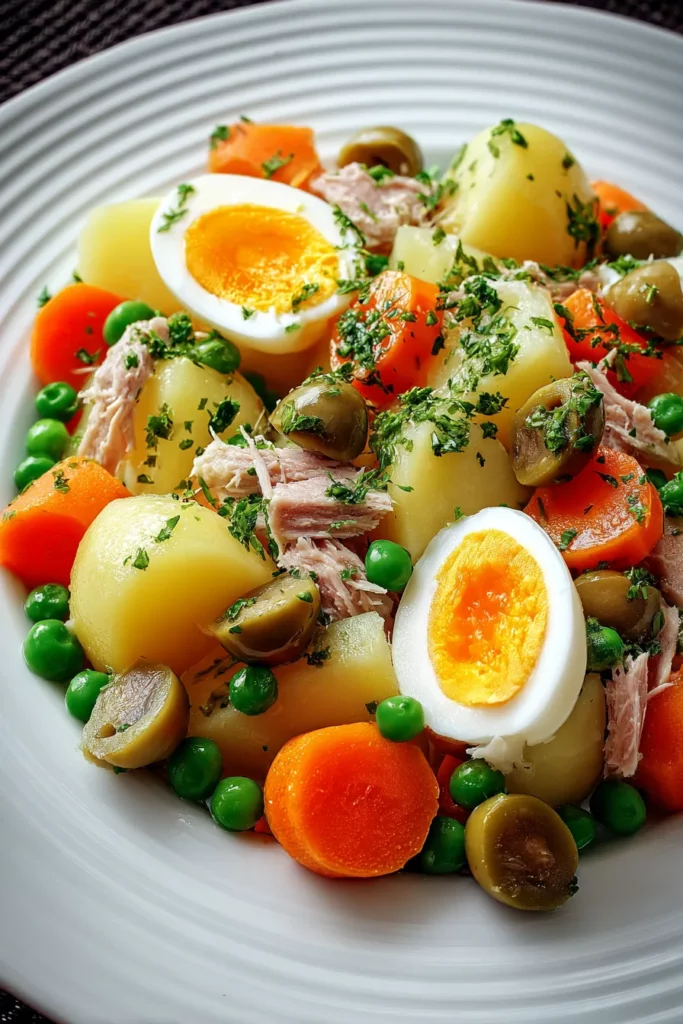

Ensalada de San Isidro
Description
This colorful salad combines tender potatoes, crisp carrots, and savory tuna, all tied together with a creamy dressing. It's a dish that celebrates spring and community, perfect for gatherings and picnics.
Ingredients
Instructions
-
Begin by thoroughly washing the potatoes and carrots. Peel the carrots and leave the skin on the potatoes if desired.
-
Boil a pot of water, add a pinch of salt, and cook the potatoes for about 20 minutes or until tender. Remove them and allow them to cool.
-
In the same pot, add the carrots and cook for about 10 minutes until they soften but still maintain some firmness. Remove and allow them to cool.
-
In a smaller pot, bring water to a boil and add the peas. Cook them for about 5 minutes until tender, then strain and set aside.
-
While vegetables are cooling, slice the hard-boiled eggs and olives. Set aside for later assembly.
-
Once the potatoes and carrots are cool, cube them into bite-sized pieces and place them in a large bowl.
-
Add the peas, sliced eggs, olives, drained and flaked tuna, roasted red peppers cut into strips, and mix gently.
-
Stir in the mayonnaise and extra virgin olive oil, ensuring all ingredients are well coated. Add salt and pepper to taste.
-
Transfer the salad to a serving dish and garnish with chopped fresh parsley for a touch of freshness and color.
-
Chill for at least an hour before serving to allow the flavors to meld together.
Note
- Ensalada de San Isidro is a common dish served in Spanish cities during the festival of San Isidro, honoring the patron saint of Madrid.
- The salad can be customized by adding or substituting ingredients, such as including corn or using chicken instead of tuna.
- For a lighter option, consider using Greek yogurt or a mixture of yogurt and mayonnaise.
- It's a perfect dish for picnics and can be prepared a day in advance, as it tastes better after resting.
- Always taste and adjust the seasoning before chilling, as chilling can sometimes dull the flavors slightly.