

When a craving for something hearty, colorful, and full of flavor hits, homemade chicken chow mein is the ultimate answer. Bursting with tender chicken strips, crisp veggies, and chewy noodles coated in a savory sauce blend, this dish transforms an ordinary weeknight dinner into a mini celebration at your kitchen counter. Every forkful delivers that satisfying contrast between the soft, springy chow mein noodles and the bright crunch of bell peppers, snap peas, and cabbage. Best of all, you don’t need a fancy takeout menu or an advanced stir-fry station—just a wok or a large skillet and a little enthusiasm.
My go-to version starts with a quick marinade of chicken in soy sauce, infusing it with umami depth before it even hits the pan. A hot wok, a swirl of oil, and the sizzle that follows are music to my ears—culinary percussion that promises something delicious is on its way. Toss in fresh garlic and fragrant ginger, stir everything together, and the kitchen fills with irresistible scents. When you’re chasing busy days or craving a light yet filling meal, this chicken chow mein comes together in just 30 minutes, making it a perfect companion for family dinners, casual gatherings, or a satisfying solo supper.
There’s something wonderfully comforting about whipping up this chow mein recipe again and again, especially knowing you can tailor every element to match whatever veggies you have on hand. From vibrant reds and greens to nutty sesame finishes, each ingredient plays a starring role. This is the kind of stir-fry that feels almost therapeutic to cook—sharp knife skills on the veggies, rapid-fire stir-frying, and the final toss that unites all the elements in one harmonious plate. And let’s be honest: there’s no better feeling than scooping up the last bite, knowing you made it all yourself. So grab your apron and let’s dive into this vibrant, easy, and utterly delicious homemade chicken chow mein!
KEY INGREDIENTS IN HOMEMADE CHICKEN CHOW MEIN
Before firing up the wok, let’s take a moment to appreciate the simple yet essential ingredients that transform humble pantry staples into a vibrant, satisfying meal. Each component brings its own texture, aroma, and flavor to the table, working together in perfect balance.
- Chow mein noodles
These springy, thin noodles create the perfect base for soaking up all the savory sauce. Their light texture allows them to crisp up slightly when stir-fried, giving each bite delightful chewiness.
- Boneless, skinless chicken breasts
Lean and easy to slice thinly, chicken breasts absorb marinade quickly and cook evenly. They provide the tender protein punch that makes this dish filling and well-rounded.
- Soy sauce
Acting both as a marinade and a finishing sauce, soy sauce contributes essential umami and saltiness. It deepens the flavor profile and helps glue all the ingredients together.
- Vegetable oil
With a high smoke point and neutral flavor, vegetable oil is ideal for stir-frying at high heat. It ensures a quick sear on the chicken and vegetables without burning.
- Green cabbage
Thinly sliced, green cabbage adds crunch and a mild sweetness. It holds up well to high heat and retains its crisp texture, adding volume and color.
- Red bell pepper
Julienned red bell pepper offers vibrant color and a juicy snap. Its sweet-tart notes contrast beautifully with the savory sauce.
- Snap peas
These little pods bring freshness and a crisp, garden-fresh bite. They cook quickly, contributing a bright green pop to the stir-fry.
- Garlic
Minced garlic infuses the oil with rich, pungent aromatics. It’s the backbone of many stir-fry dishes, adding depth and warmth.
- Ginger
Freshly grated ginger brightens the dish with its peppery, zesty kick. It pairs seamlessly with garlic to elevate the overall aroma.
- Oyster sauce
A touch of oyster sauce introduces a slightly sweet, briny complexity that deepens the sauce’s richness and helps it cling to noodles and chicken.
- Sesame oil
Just a drizzle of sesame oil adds a toasty, nutty note that’s signature to many Asian stir-fries. It’s best added at the end for maximum aroma.
- Green onions
Sliced green onions bring fresh, oniony crunch and a burst of color. They’re sprinkled in at the finish to lighten and brighten each bite.
- Salt and pepper
Simple seasoning staples that allow you to tweak the flavor to your preference. They round out the dish without overpowering the key ingredients.
- Sesame seeds
Optional but highly recommended, sesame seeds lend a delicate crunch and a subtle nutty accent that complement the sesame oil perfectly.
HOW TO MAKE HOMEMADE CHICKEN CHOW MEIN
Let’s walk through the steps to create a fast, flavorful stir-fry that showcases tender chicken, crisp vegetables, and perfectly sauced noodles. With a hot pan, fresh ingredients, and a few simple techniques, you’ll have a restaurant-worthy chow mein ready in no time.
1. Cook the chow mein noodles according to the package instructions, then drain them thoroughly and toss with a tiny splash of oil to prevent sticking. Set aside, keeping them warm while you prepare the rest of the dish.
2. In a medium bowl, toss the thinly sliced chicken breast with soy sauce, ensuring each piece is evenly coated. This quick marinade adds depth and helps the chicken brown beautifully.
3. Heat 1 tablespoon of vegetable oil in a large skillet or wok over medium-high heat. Add the chicken in a single layer and cook until browned on both sides and cooked through, about 5–7 minutes. Remove the chicken from the skillet and set aside on a plate.
4. In the same skillet, add the remaining tablespoon of vegetable oil. Stir-fry the sliced cabbage, julienned bell pepper, and snap peas for about 3–4 minutes, tossing constantly so the veggies become tender-crisp without losing their bright color.
5. Push the vegetables to the edges of the pan and add the minced garlic and grated ginger to the center. Stir for another 30 seconds until the aromatics turn fragrant, being careful not to let them burn.
6. Return the cooked chicken to the skillet. Add the drained noodles along with soy sauce, oyster sauce, and sesame oil. Use tongs or two spatulas to toss everything together, ensuring the sauce coats every piece of noodle, chicken, and vegetable evenly. Heat through for 1–2 minutes.
7. Season with salt and pepper to taste, then stir in the sliced green onions for a fresh crunch. Give the pan one last toss to distribute the flavors.
8. Transfer the chow mein to a serving platter or individual plates. Garnish with sesame seeds if desired, and serve hot.
SERVING SUGGESTIONS FOR HOMEMADE CHICKEN CHOW MEIN
Whether you’re plating this stir-fry for a family supper or as part of a larger spread, thoughtful presentation and complementary flavors can elevate the experience. Here are four engaging ways to serve your homemade chicken chow mein:
- Arrange the noodles on a large, shallow platter, allowing the colors of the bell pepper, snap peas, and green onions to pop. Garnish the edges with extra sesame seeds and a handful of fresh cilantro leaves for an inviting, shared-style presentation.
- Pair with a crisp cucumber salad tossed in rice vinegar, a pinch of sugar, and a sprinkle of chili flakes. The cool, refreshing side contrasts beautifully with the warm, savory noodles and adds a light crunchy texture.
- Serve the chow mein alongside crispy wonton strips or homemade garlic bread for an unexpected twist. The additional crunch complements the tender noodles and makes every bite extra fun.
- Create a dipping station featuring soy sauce mixed with a dash of chili oil or a simple peanut-sesame sauce. Guests can customize each bite, dipping noodles or chicken pieces for an interactive touch that’s always a hit.
HOW TO STORE HOMEMADE CHICKEN CHOW MEIN
One of the best parts of this recipe is that it reheats beautifully, making it an ideal candidate for meal prep and leftover lunches. To maintain freshness and texture, follow these storage methods:
- Keep in a sealed airtight container in the refrigerator. Properly cooled and stored, your chow mein will stay fresh for up to 3 days. Make sure it reaches room temperature before sealing to prevent excess moisture.
- For longer storage, portion the chow mein into freezer-safe containers or heavy-duty freezer bags. Remove as much air as possible, label with the date, and freeze for up to 2 months. Thaw overnight in the fridge before reheating.
- If you know you’ll be reheating later, consider storing the sauce separately from the noodles and vegetables. This helps prevent the noodles from becoming overly soft. Simply reheat the solids, then stir in warmed sauce at the end.
- To reheat without losing texture, warm a splash of oil in a skillet or wok over medium-high heat, then add the leftovers, stirring constantly for 3–4 minutes until heated through. This revives the crispness of the vegetables and prevents sogginess.
CONCLUSION
This homemade chicken chow mein recipe brings together the perfect symphony of flavors, textures, and aromas in every bite. From the moment you slice your crisp bell peppers and grate fresh ginger to the final drizzle of sesame oil, you’re in complete control of the ingredients and seasoning. Whether it’s a busy weeknight when you need dinner on the table in under 30 minutes or a casual weekend gathering where you want something both familiar and exciting, this dish delivers on all fronts. The vibrant veggies add a garden-fresh crunch, the succulent chicken provides satisfying protein, and the perfectly sauced noodles tie everything together in a harmonious balance. Because you’re using straightforward ingredients and basic techniques, this chow mein is accessible to cooks of all skill levels—even if you’re just starting your culinary journey. Feel free to customize with extra veggies, swap in tofu for a vegetarian twist, or experiment with different sauces to make it truly your own.
As you wrap up your cooking session, remember to print this article and save it for future reference—you’ll thank yourself on those evenings when you need a quick, crowd-pleasing meal idea. You can also check out the FAQ below for answers to common chow mein questions, from sauce adjustments to noodle substitutes. If you give this recipe a try, I’d love to hear how it turned out: share your thoughts, any tweaks you made, or questions you encountered along the way. Your feedback helps me refine the recipe and inspires other home cooks to bring delicious, homemade comfort food to their tables. Enjoy every bite, and happy cooking!
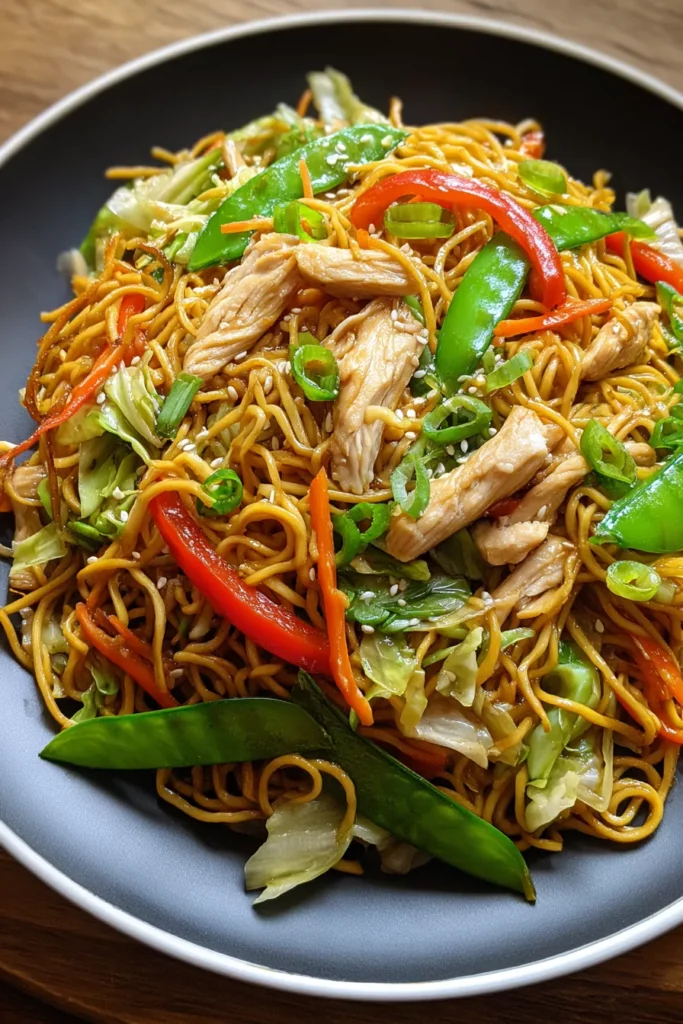

Homemade Chicken Chow Mein
Description
Savor the delightful mix of tender chicken, crisp vegetables, and savory sauces tossed with chow mein noodles in this homemade stir-fry that's perfect for any meal.
Ingredients
Instructions
-
Cook the chow mein noodles according to the package instructions. Drain and set aside.
-
In a medium bowl, toss the sliced chicken breast with 1 tablespoon of soy sauce.
-
Heat 1 tablespoon of vegetable oil in a large skillet or wok over medium-high heat. Add the chicken and cook until browned and cooked through, about 5-7 minutes. Remove the chicken from the skillet and set aside.
-
In the same skillet, add the remaining tablespoon of vegetable oil. Stir-fry the cabbage, bell pepper, and snap peas for about 3-4 minutes, or until they are tender-crisp.
-
Add the garlic and ginger to the skillet and stir for another 30 seconds until fragrant.
-
Return the cooked chicken to the skillet. Add the drained noodles, 1/4 cup of soy sauce, oyster sauce, and sesame oil. Toss everything together until well combined and heated through.
-
Season with salt and pepper to taste. Stir in the sliced green onions.
-
Transfer the chow mein to a serving plate. Garnish with sesame seeds if desired.
Note
- For a vegetarian version, substitute chicken with tofu or additional vegetables like mushrooms or broccoli.
- The key to a great chow mein is high heat and quick cooking to maintain the vegetables' crispness.
- Leftover chow mein can be stored in an airtight container in the refrigerator for up to 3 days.
- Experiment with different vegetables to customize this dish to your preference.