

Warm up your soul with a bowl of vibrant Peanut Satay Noodle Soup, bursting with flavor and comforting spices! Every spoonful balances the rich, creamy texture of peanut butter with the fragrant sweetness of coconut milk, while red curry paste brings a gentle heat that dances on your tongue. Bright vegetables like crisp bell peppers and tender carrots lend a pop of color and freshness, making each bite a delightful contrast of textures. Bean sprouts, fresh cilantro, and a sprinkling of chopped peanuts add crunch and herbal brightness, turning this soup into a multi-sensory experience you won’t soon forget.
Whether you’re craving a cozy solo lunch or feeding friends on a chilly afternoon, this hearty noodle soup delivers instant warmth and satisfaction. With simple pantry staples and easy-to-find ingredients, it’s a beginner-friendly recipe that proves you don’t need hours in the kitchen to create something extraordinary. In just under 35 minutes, you’ll have a nourishing, vegetarian meal that tastes like it took far more effort than it actually did!
This recipe is classified as an easy, beginner-level lunch option—perfect for weeknight dinners or a leisurely weekend cook-up. You’ll spend around 15 minutes on prep and just 20 minutes bringing everything together on the stove, meaning you’ll be sitting down to eat in no time. Each serving clocks in at roughly 450 calories and yields four generous portions, making it a terrific choice for meal prep or family-style sharing. With its vibrant colors, creamy broth, and satisfying noodle base, this Peanut Satay Noodle Soup is guaranteed to become a new favorite in your culinary rotation.
KEY INGREDIENTS IN PEANUT SATAY NOODLE SOUP
Before we dive into cooking, let’s talk about the star players that make this soup so unforgettable. Each ingredient brings a unique flavor or texture, combining to create a harmonious bowl of comfort and spice.
- Rice noodles
Soft and slippery, these noodles soak up the rich broth beautifully, providing the perfect base for all those bold flavors.
- Vegetable oil
A neutral oil that serves as the foundation for sautéing garlic and ginger without competing with their aromatics.
- Garlic
Minced and aromatic, garlic infuses the soup with a savory punch that’s impossible to ignore.
- Fresh ginger
Grated to release its zesty warmth, ginger brightens the broth and balances the richness of peanut butter.
- Red bell pepper
Thinly sliced for a sweet crunch and vibrant color, it adds freshness to every spoonful.
- Carrot
Julienned to maintain just enough bite, carrots lend mild sweetness and a pop of orange hue.
- Red curry paste
The spicy backbone of the soup, this paste delivers complex heat, lemongrass notes, and a hint of smokiness.
- Coconut milk
Creamy and slightly sweet, coconut milk forms the luscious, silky soup base that carries the peanut flavor.
- Vegetable broth
Adds depth and savory richness while keeping the recipe vegetarian-friendly.
- Soy sauce
Seasoning the broth with umami and saltiness, soy sauce rounds out all the flavors perfectly.
- Creamy peanut butter
The soulful heart of satay, it melts into the broth for a nutty, indulgent creaminess.
- Lime juice
A squeeze of fresh lime brightens the broth, cutting through the richness with tangy flair.
- Brown sugar
Balances the heat and acidity with a gentle molasses sweetness.
- Bean sprouts
Added at the end for a crisp, watery crunch that contrasts beautifully with the soft noodles.
- Fresh cilantro
Chopped and sprinkled on top, cilantro introduces a burst of herbal freshness.
- Roasted peanuts
Chopped and scattered over the soup for an extra layer of nutty texture and flavor.
- Lime wedges
Served on the side so each person can customize their bowl with an extra citrus kick.
HOW TO MAKE PEANUT SATAY NOODLE SOUP
Let’s get cooking! Follow these detailed steps to transform simple ingredients into a soul-warming adventure in a bowl. From perfectly cooked rice noodles to a creamy, flavor-packed broth, you’ll see how easy it is to assemble this dish like a pro.
1. Cook the rice noodles according to the package instructions, then drain them thoroughly and set aside. Ensuring they’re not overly starchy will help them absorb the satay broth without clumping.
2. Heat the vegetable oil in a large pot over medium heat. Add the minced garlic and grated ginger, sautéing for about 1 minute until fragrant and lightly golden. This bloom of aromatics forms the flavor base of your soup.
3. Add the red bell pepper and carrot, cooking for another 2–3 minutes until they’re slightly tender but still hold some bite. This quick sauté keeps the vegetables bright and texturally interesting.
4. Stir in the red curry paste, allowing it to cook for about 1 minute to unlock its essential oils and deepen its flavor. You’ll notice the paste becoming more aromatic and the vegetables coating in its vibrant red hue.
5. Pour in the coconut milk and vegetable broth, stirring well to combine with the curry paste. This is when the soup transforms into a creamy, cohesive liquid.
6. Add the soy sauce, creamy peanut butter, lime juice, and brown sugar, stirring continuously until the peanut butter is fully dissolved and the soup is luxuriously smooth.
7. Bring the soup to a simmer and let it cook for 5–7 minutes, allowing all the flavors to meld together into one harmonious blend.
8. Add the cooked rice noodles and bean sprouts to the pot, stirring gently to ensure every strand is coated in the satay broth without tearing.
9. Serve the soup hot, garnished with fresh cilantro, chopped roasted peanuts, and lime wedges on the side for a final burst of fragrance and crunch.
SERVING SUGGESTIONS FOR PEANUT SATAY NOODLE SOUP
When it comes to serving your Peanut Satay Noodle Soup, presentation and pairing make all the difference. Whether you’re hosting a casual lunch or preparing a cozy dinner at home, thoughtful touches can elevate this humble bowl into a showstopping meal. Imagine steaming bowls at the center of the table, each one topped with artful garnishes that beckon guests to dig in. A well-presented bowl not only looks inviting but also teases the senses with vibrant colors and textures before the first taste.
Here are four simple yet impactful ways to serve up your satay soup like a pro:
- Garnish with Fresh Citrus Zest
Before serving, grate a bit of lime zest over each bowl for an extra layer of bright acidity that pops against the creamy broth.
- Serve in Preheated Bowls
Warm your bowls in the oven or with hot water so the soup retains its steamy temperature longer, keeping every spoonful deliciously warm.
- Offer Accompaniments
Place small dishes of sliced fresh chili, extra bean sprouts, and chopped cilantro on the table so everyone can customize their heat and crunch levels.
- Pair with Crunchy Sides
Complement the soup’s silky texture with crispy spring rolls or vegetable tempura for a balance of soft and crunchy bites in one meal.
HOW TO STORE PEANUT SATAY NOODLE SOUP
Proper storage ensures that your Peanut Satay Noodle Soup stays fresh, flavorful, and ready to enjoy whenever hunger strikes. Because the broth and noodles absorb flavors differently over time, thoughtful storage techniques are key. Ideally, separate the solid noodles from the soup base if you plan to keep leftovers longer. This prevents the noodles from becoming overly soft or mushy, preserving that satisfying bite you love.
Below are four effective methods to store your soup for maximum freshness:
- Refrigeration in Airtight Containers
Transfer the soup (without noodles) to a sealed container and refrigerate for up to 4 days. When ready to eat, reheat the broth gently on the stove and cook fresh noodles or revive the stored ones briefly in boiling water.
- Freezing in Portion Packs
Freeze the soup base in individual freezer-safe bags or containers for up to one month. Thaw overnight in the fridge, reheat, and then add freshly cooked noodles for a near-fresh meal.
- Noodle Storage
Store cooked rice noodles separately in a lightly oiled container to prevent sticking. Keep refrigerated for up to 2 days, then rinse under hot water before reheating with the broth.
- Reheating Tips
Always reheat on the stovetop over medium-low heat, stirring occasionally. If the broth thickens, add a splash of vegetable broth or water to restore its silky consistency.
CONCLUSION
Thank you for joining me on this flavorful journey through Peanut Satay Noodle Soup! From the first fragrant sizzle of garlic and ginger to that luscious swirl of creamy peanut butter in coconut milk, we’ve covered every detail you need to whip up this crowd-pleasing, vegetarian-friendly dish. You now have all the tips, ingredient insights, and cooking techniques at your fingertips—whether you’re a complete beginner or an experienced home cook looking for an easy yet impressive lunch option. Don’t forget that this recipe takes just 15 minutes of prep and 20 minutes of cooking, making it an ideal solution for busy weeknights or relaxed weekend lunches. Plus, with four servings at around 450 calories each, you can easily plan for leftovers or share with friends and family.
Feel free to print this article or save it for later use; it’s perfect to tuck into your recipe binder for those days when you crave something warm, nurturing, and full of bold flavors. Below, you’ll find a handy FAQ section to answer any lingering questions (so be sure to check it out!). If you have any comments, questions, or feedback—whether you tried the recipe, added your own twist, or need help troubleshooting—please drop a note in the comments. I’d love to hear about your experiences and help in any way I can. Happy cooking, and may your kitchen always smell as irresistible as a fresh bowl of Peanut Satay Noodle Soup!
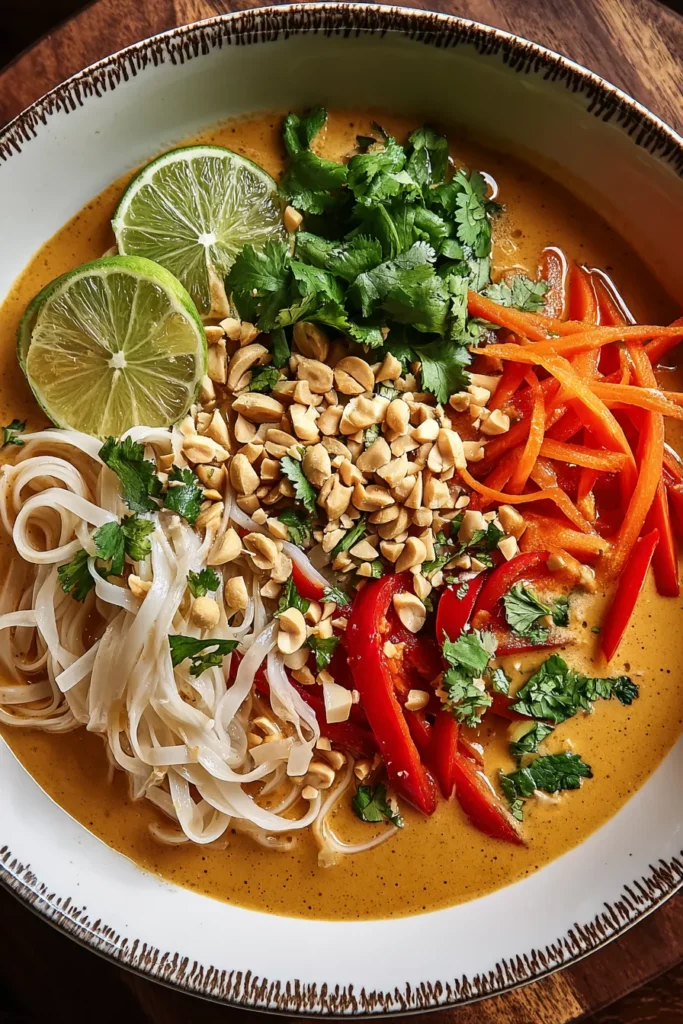

Peanut Satay Noodle Soup
Description
This hearty noodle soup combines creamy peanut butter, fragrant coconut milk, and vibrant veggies to create a comforting bowl that's perfect for any time.
Ingredients
Instructions
-
Cook the rice noodles according to package instructions, then drain and set aside.
-
Heat the vegetable oil in a large pot over medium heat. Add the minced garlic and grated ginger, sautéing for about 1 minute until fragrant.
-
Add the red bell pepper and carrot, cooking for another 2-3 minutes until slightly tender.
-
Stir in the red curry paste, allowing it to cook for about 1 minute to release its flavors.
-
Pour in the coconut milk and vegetable broth, stirring well to combine with the curry paste.
-
Add the soy sauce, peanut butter, lime juice, and brown sugar, stirring until the peanut butter is completely dissolved and the soup is smooth.
-
Bring the soup to a simmer and let it cook for 5-7 minutes, allowing the flavors to meld together.
-
Add the cooked rice noodles and bean sprouts to the pot, stirring gently to combine with the soup.
-
Serve the soup hot, garnished with fresh cilantro, chopped roasted peanuts, and lime wedges on the side.
Note
- For a spicier kick, add sliced fresh chili peppers or a dash of hot sauce.
- Substitute chicken or shrimp for a non-vegetarian version of this soup.
- Use zucchini or sweet potatoes for added texture and nutrients.
- Ensure your peanut butter is smooth and free from added sugars for the best results.
- This soup can be prepared ahead of time and frozen for up to a month.