

There’s something undeniably comforting about sinking your teeth into a slice of bread that’s been thoughtfully nurtured from start to finish. With this Pumpkin Sourdough Bread, you’re not just baking—you’re celebrating the rich, cozy flavors of fall, the tangy depth of a well-fed starter, and the gentle sweetness of pumpkin puree. Each step in the process—from that first mix of starter, water, and pumpkin, to the satisfying stretch-and-fold sessions—becomes part of a little ritual that connects you to age-old traditions of slow baking. You’ll delight in the slight tang that cuts through the earthy sweetness of pumpkin, creating a loaf that’s both rustic and refined.
As the dough rises and the scent of pumpkin mingles with the sourdough’s characteristic notes, your kitchen begins to feel like the heart of the home—warm, inviting, and full of promise. This bread isn’t just a side dish; it’s a star player for lunch, dinner, or an elevated mid-morning snack. You’ll love how the crumb remains moist and soft thanks to the pumpkin puree, while that golden crust offers a pleasing crackle as you slice through it. So tie on your apron, dust off your proofing basket, and let’s dive into a loaf that captures everything we adore about autumn in each tender, flavorful slice.
KEY INGREDIENTS IN PUMPKIN SOURDOUGH BREAD
Before you start mixing, it’s helpful to understand what each ingredient brings to the party. This recipe uses simple staples, but every element plays a key role in achieving the perfect balance of structure, flavor, and moisture.
- Active sourdough starter
Your natural leavening agent, full of wild yeast and lactic acid bacteria. It gives this loaf its gentle tang, helps it rise, and adds depth of flavor that you just can’t get from commercial yeast.
- Water
Hydrates the flour and awakens enzymes that contribute to gluten development. It also helps dissolve salt and evenly distribute the pumpkin puree.
- Pumpkin puree
Adds moisture, a subtle sweetness, and that signature autumn color. The natural sugars in the pumpkin also support a tender crumb and a slightly caramelized crust.
- Bread flour
Provides the protein necessary for a strong gluten network. This structure traps the gases produced by the starter, resulting in those lovely open holes in the crumb.
- Salt
Enhances all the flavors and strengthens gluten strands. It also regulates fermentation, ensuring your dough doesn’t overproof too quickly.
- Pumpkin pie spice (optional)
A warming blend of cinnamon, nutmeg, ginger, and cloves. It’s an optional touch that layers in aromatic warmth and accentuates that pumpkin-y goodness.
HOW TO MAKE PUMPKIN SOURDOUGH BREAD
Let’s walk through this recipe step by step. You’ll see how simple techniques—autolyse, stretch-and-fold, cold proof—combine to yield a loaf bursting with fall flavor and artisanal character.
1. In a large mixing bowl, combine the active sourdough starter, water, and pumpkin puree. Mix until fully incorporated and smooth. This initial blend ensures all the wet ingredients are evenly distributed before adding flour.
2. Add the bread flour to the wet mixture. Stir with a wooden spoon or dough whisk until all the flour is absorbed and you have a shaggy dough. Don’t worry about perfection here; you just want a rough mass.
3. Cover the bowl with a damp cloth and let the dough rest for 30 minutes. This is the autolyse stage where the flour hydrates and starts to develop gluten, improving extensibility.
4. After 30 minutes, sprinkle the salt over the dough. If you’re using pumpkin pie spice, add it now. Use your fingers to pinch and fold the dough until the salt and spice are incorporated. This action helps evenly season the dough.
5. Perform the first set of stretch and folds: With wet hands, grab one side of the dough, stretch it up, and fold it over itself. Rotate the bowl 90 degrees and repeat. Do this for a total of 4 folds. This builds strength in the dough.
6. Cover and let the dough rest for another 30 minutes. Repeat the stretch and fold process 2 more times, resting for 30 minutes between each session. Each series of folds further strengthens gluten and organizes the dough.
7. After the final stretch and fold, let the dough rise in a warm place until it has doubled in size, approximately 4–6 hours. This bulk fermentation develops flavor and structure.
8. Once doubled, gently remove the dough onto a lightly floured surface, taking care not to deflate it too much.
9. Shape the dough into a round or oval loaf, depending on your preference and the shape of your proofing basket.
10. Dust your proofing basket with flour and place the shaped dough into it, seam side up. Cover and refrigerate for 12–18 hours for a cold proof that deepens flavor.
11. Preheat your oven to 450°F (230°C) with a Dutch oven inside. Once preheated, carefully remove the Dutch oven and place your dough inside, seam side down.
12. Score the top of the dough with a sharp knife or lame to guide controlled expansion.
13. Cover and bake for 20 minutes. Remove the lid and continue to bake for an additional 20–25 minutes until the bread is a deep golden color with a crisp crust.
14. Remove from the oven and let cool on a wire rack before slicing, allowing the crumb to set fully.
SERVING SUGGESTIONS FOR PUMPKIN SOURDOUGH BREAD
When your Pumpkin Sourdough loaf emerges golden and inviting, you’ll want to savor every crumb. Whether you’re serving it at a cozy family brunch or sharing slices with friends at a fall gathering, these ideas will help you highlight the bread’s tender crumb and warm spice notes in delicious ways.
- Toasted slices with butter and honey
Gently toast each slice until the edges begin to crisp. Spread a thin layer of room-temperature butter, then drizzle with honey for a sweet contrast that enhances the pumpkin’s natural sugars.
- Open-faced cream cheese and smoked salmon
Spread a generous layer of whipped cream cheese, top with thin ribbons of smoked salmon, a sprinkle of chopped dill, and a crack of black pepper. The tang from the cheese and the savory fish create an elegant bite.
- Rustic sandwich with roasted turkey and cranberry relish
Layer your oven-roasted turkey, a smear of mayonnaise, and a spoonful of tangy cranberry relish between two thick slices. This seasonal twist on a classic sandwich is perfect for lunch or picnic fare.
- Warm bowl of soup accompaniment
Serve a hearty butternut squash or tomato bisque alongside thick-cut bread slices. The cozy flavors complement each other beautifully, and the sturdy crust stands up to dunking.
HOW TO STORE PUMPKIN SOURDOUGH BREAD
Storing homemade sourdough properly ensures you’ll enjoy that moist, flavorful crumb days after baking. Since this loaf contains pumpkin puree and no preservatives, follow these guidelines to keep it fresh and delicious.
Bread can start to dry out quickly, especially in low-humidity environments. To maintain moisture and prevent a stale crust, store your loaf in a breathable bag at room temperature. A cotton bread bag or a lightly closed paper bag strikes the right balance between airflow and protection. Avoid plastic wrap or sealed containers at room temp, as trapping moisture can lead to a soggy crust.
If you know you won’t finish the loaf within two days, consider freezing slices. Cut the bread into serving-size pieces and place parchment paper between slices to prevent sticking. Seal them in a freezer-safe bag, pushing out excess air. When you’re ready to eat, pop a slice in the toaster straight from frozen for a crisp exterior and tender interior.
For short-term storage in the fridge, wrap the cooled loaf in a clean cotton towel and place it inside a loosely closed plastic container. The cooler temperature slows mold growth, but remember that refrigeration can accelerate staling. Use this method only if your home is hot or humid and mold is a concern.
In all cases, allow your bread to cool completely before storing. Trapping residual heat creates condensation, which can soften the crust and encourage spoilage. By following these steps, you’ll savor the tangy pumpkin-sourdough harmony long after you’ve pulled your masterpiece from the oven.
CONCLUSION
Thank you for joining me on this autumnal baking adventure! This Pumpkin Sourdough Bread brings together the tangy complexity of a mature starter and the gentle sweetness of pumpkin puree, resulting in a loaf that’s both nutritious and soul-warming. From the first mix of ingredients through the satisfying rhythm of stretch-and-folds, to the quiet patience of a cold proof in the fridge, each stage invites you to slow down, embrace the process, and delight in the transformation that happens when flour, water, and yeast come together. You’ll find the crust crackles as you slice it, the crumb holds a perfect balance of moistness and structure, and every bite carries a hint of spice if you’ve added that optional pumpkin pie blend.
Feel free to print this article and tuck it into your recipe binder or bookmark it for the next time you’re craving a loaf that’s hearty enough for sandwiches but special enough for holiday gatherings. Below, you’ll find a FAQ section with answers to common questions about timing, troubleshooting, and substitutions. If you give this recipe a try, I’d love to hear how it turned out for you. Drop a comment with your thoughts, ask questions if you need clarity on any of the steps, or share your own variations—maybe you’ll add toasted pepitas on top, swirl in some molasses, or experiment with whole wheat flour. Happy baking, and may your kitchen always smell of warm spices and fresh bread!
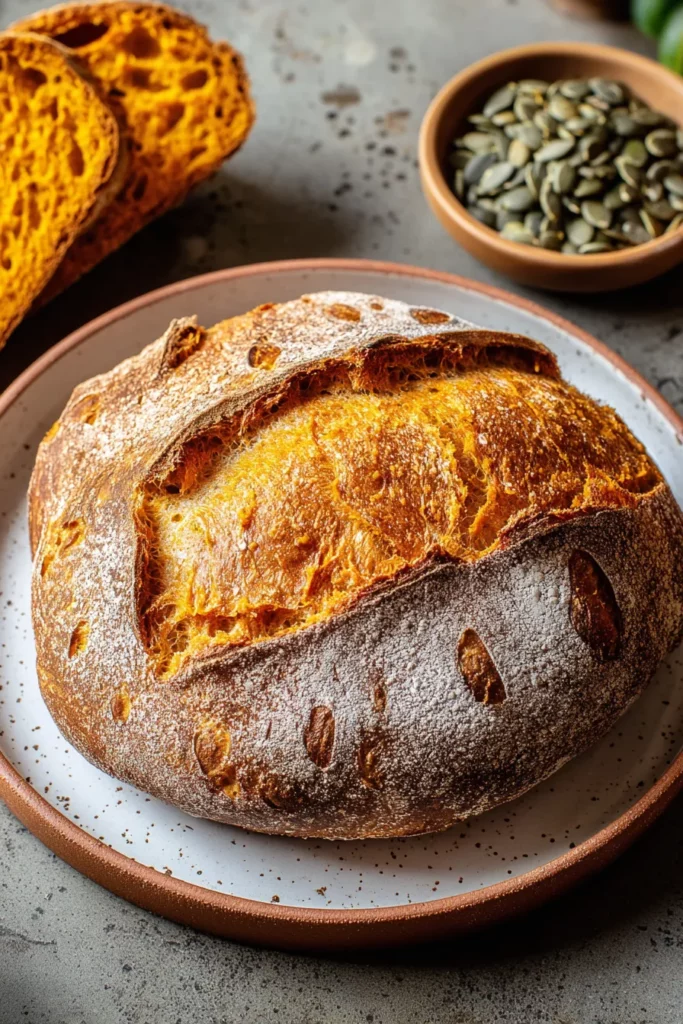

Pumpkin Sourdough Bread
Description
This Pumpkin Sourdough Bread combines the tanginess of sourdough with the sweetness of pumpkin, creating a moist, flavorful loaf perfect for any meal.
Ingredients
Instructions
-
In a large mixing bowl, combine the active sourdough starter, water, and pumpkin puree. Mix until fully incorporated and smooth.
-
Add the bread flour to the wet mixture. Stir with a wooden spoon or dough whisk until all the flour is absorbed and you have a shaggy dough.
-
Cover the bowl with a damp cloth and let the dough rest for 30 minutes. This is the autolyse stage where the flour hydrates and starts to develop gluten.
-
After 30 minutes, sprinkle the salt over the dough. If you're using pumpkin pie spice, add it now. Use your fingers to pinch and fold the dough until the salt and spice are incorporated.
-
Perform the first set of stretch and folds: With wet hands, grab one side of the dough, stretch it up, and fold it over itself. Rotate the bowl 90 degrees and repeat. Do this for a total of 4 folds.
-
Cover and let the dough rest for 30 minutes. Repeat the stretch and fold process 2 more times, resting for 30 minutes between each session.
-
After the final stretch and fold, let the dough rise in a warm place until it has doubled in size, approximately 4-6 hours.
-
Once doubled, gently remove the dough onto a lightly floured surface, taking care not to deflate it too much.
-
Shape the dough into a round or oval loaf, depending on your preference and the shape of your proofing basket.
-
Dust your proofing basket with flour and place the shaped dough into it, seam side up. Cover and refrigerate for 12-18 hours for a cold proof.
-
Preheat your oven to 450°F (230°C) with a Dutch oven inside. Once preheated, carefully remove the Dutch oven and place your dough inside, seam side down.
-
Score the top of the dough with a sharp knife or lame.
-
Cover and bake for 20 minutes. Remove the lid and continue to bake for an additional 20-25 minutes until the bread is a deep golden color.
-
Remove from the oven and let cool on a wire rack before slicing.
Note
- Pumpkin puree adds moisture and a slight sweetness to the loaf, complementing the sourdough's tang.
- The cold-proof in the refrigerator develops more complex flavors.
- Scoring the bread allows it to expand without cracking.
- Enjoy this bread toasted with a spread of butter or cream cheese!