

When the midday slump hits and my taste buds crave something exciting, I reach for a bowl of Spicy Korean Gochujang Beef Noodles. This dish delivers an irresistible balance of savory, sweet, and fiery flavors that never fails to lift my spirits. Tender slices of beef sirloin swim in a luxuriously bold gochujang sauce, and each bite is a celebration of textures—from the chew of ramen or udon noodles to the gentle crunch of julienned carrots and crisp bell peppers. As a home cook who loves experimenting, I’m always thrilled by how a simple pantry staple like gochujang can transform an ordinary weeknight dinner into a vibrant, restaurant-worthy experience.
I still remember the first time I tried gochujang at a local farmer’s market tasting booth. The tasting spoon left my mouth tingling with heat, but I was instantly hooked by its deep, fermented complexity. That encounter turned into a mission to recreate and perfect the bold flavors at home, and this recipe is the delicious result. It’s all about that luscious red chili paste dancing with soy sauce, sesame oil, rice vinegar, and a hint of brown sugar, weaving together to coat every strand of noodle. If you’re looking to spice up your dinner with a flavorful recipe that packs a punch of Korean flair, these gochujang beef noodles are the perfect adventure for your taste buds.
KEY INGREDIENTS IN SPICY KOREAN GOCHUJANG BEEF NOODLES
Before we dive into the cooking process, let’s take a closer look at the hero ingredients that make this dish shine. Each component plays its part, from creating that iconic spicy-sweet sauce to providing vibrant color and textural contrast.
- Beef sirloin
Lean and tender, thinly sliced sirloin is the perfect protein for quick stir-frying. It soaks up the gochujang sauce beautifully, offering savory richness in every bite.
- Noodles (ramen or udon)
Choose a chewy noodle that holds up to tossing in bold sauces. Ramen noodles bring a lighter bite, while udon offers a heartier chew.
- Gochujang (Korean chili paste)
This fermented chili paste is the soul of the recipe, delivering spicy heat, subtle sweetness, and that signature umami depth.
- Soy sauce
Adds a savory backbone and salty balance, helping to round out the sweetness of the brown sugar and the tang of rice vinegar.
- Sesame oil
A little drizzle introduces toasty, nutty notes that elevate the flavor profile and perfume the dish with aromatic warmth.
- Rice vinegar
Provides a bright, tangy lift that cuts through the richness of the beef and sauce, keeping the dish lively.
- Brown sugar
Offers gentle sweetness and helps to caramelize the sauce when it meets hot oil and beef, creating depth of flavor.
- Garlic
Freshly minced garlic brings pungent, aromatic sharpness that complements the spice of gochujang beautifully.
- Ginger
Grated ginger adds a lively, peppery zing, brightening the sauce with its fresh warmth.
- Vegetable oil
A neutral cooking oil that helps sear the beef and stir-fry the vegetables without competing flavors.
- Red bell pepper
Thinly sliced for sweetness and vivid color, it adds crisp texture when lightly stir-fried.
- Carrot
Julienned for a tender-crunch element and subtle earthiness, balancing the robust sauce.
- Green onions
Chopped and stirred in at the end for a pop of fresh, oniony brightness and cheerful green color.
- Baby spinach leaves
Wilt into the noodles at the final stage for a boost of leafy greens and tender texture.
- Sesame seeds
Toasted for garnish, they deliver a final sprinkle of nutty crunch on top of the finished dish.
- Fresh cilantro (optional)
Adds an herbal, citrusy lift if you love that bright, fresh finish.
HOW TO MAKE SPICY KOREAN GOCHUJANG BEEF NOODLES
Let’s roll up our sleeves and bring these ingredients together into one sensational bowl of noodles. The process moves quickly, so have your mise en place ready and your wok or skillet heated. Here’s how to build layers of flavor, step by step:
1. Cook the noodles according to the package instructions, drain, and set aside. Aim for them to be just al dente so they hold up in the stir-fry without turning mushy.
2. In a small bowl, whisk together the gochujang, soy sauce, sesame oil, rice vinegar, brown sugar, garlic, and ginger to create the sauce. Taste and adjust the level of spice by adding more or less gochujang, customizing heat to your preference.
3. Heat the vegetable oil in a large skillet or wok over medium-high heat until shimmering but not smoking. This ensures a quick sear and prevents stewing.
4. Add the sliced beef and cook until browned on all sides, about 4–5 minutes. The goal is a caramelized exterior while keeping the center juicy. Remove the beef from the skillet and set aside.
5. In the same skillet, add the red bell pepper and carrot. Stir-fry for 2–3 minutes until they begin to soften but still retain a bit of crunch and vibrant color.
6. Return the cooked beef to the skillet. Add the sauce and stir continuously to coat the meat and vegetables evenly, allowing the mixture to bubble and thicken slightly.
7. Add the cooked noodles and gently toss everything together until the noodles are heated through and fully coated with the sauce, ensuring each strand glistens with flavor.
8. Stir in the chopped green onions and baby spinach, cooking until the spinach wilts slightly, about 1–2 minutes. This final step adds a fresh, tender contrast.
9. Transfer the noodles to serving plates and garnish with sesame seeds and fresh cilantro if desired. The finishing touches bring both texture and a pop of green brilliance.
SERVING SUGGESTIONS FOR SPICY KOREAN GOCHUJANG BEEF NOODLES
Bringing these noodles to the table is a moment of genuine pride and delight. Whether it’s a casual family dinner or a laid-back meal with friends, plating and pairing choices can enhance the overall experience. A steaming bowl of these bold noodles deserves thoughtful presentation and complementary sides to showcase its layers of flavor.
- Upgrade your bowl with a soft-boiled egg sliced in half. The golden, runny yolk melds with the spicy sauce for an extra layer of creamy richness that’s downright irresistible.
- Serve alongside a crisp cucumber salad dressed in rice vinegar, a touch of sugar, and a sprinkle of sesame seeds. The cool, refreshing crunch cuts through the heat, balancing each bite.
- Offer kimchi on the side for a probiotic-packed punch and contrasting tang. The fermented cabbage’s bright, zesty flavor plays beautifully off the hearty beef and noodles.
- Garnish with additional toasted sesame seeds and thinly sliced green onion curls. These small details add delicate texture and a pop of visually appealing contrast on top of each serving.
HOW TO STORE SPICY KOREAN GOCHUJANG BEEF NOODLES
If you’re anything like me, leftovers are a welcome bonus—especially when they’re as flavorful as these noodles. Proper storage ensures your dish stays fresh, moist, and bursting with flavor, ready to be reheated for another satisfying meal.
- Refrigerate in an airtight container within two hours of cooking. Press a piece of plastic wrap directly onto the noodles to minimize air exposure and prevent drying out. Consume within 2 days for best results.
- Store the sauce separately if possible. Keeping the noodles and beef in one container and the sauce in a small jar preserves the texture of the noodles and prevents them from becoming overly saucy.
- For longer storage, freeze in a freezer-safe container. Allow the dish to cool completely before sealing. It will keep for up to one month. Thaw overnight in the refrigerator before reheating gently on the stove.
- Reheat on the stovetop over low heat, adding a splash of water or broth to revive the sauce’s consistency. Stir continuously until warmed through, taking care not to overcook the noodles.
CONCLUSION
From the first bold spoonful of gochujang-laced sauce to the last tender strand of chewy noodles, Spicy Korean Gochujang Beef Noodles bring an unforgettable fusion of flavors to your dinner table. We’ve explored how each ingredient—from the lean beef sirloin to the vibrant red bell pepper—contributes to a harmonious balance of heat, sweetness, and umami depth. With easy-to-follow instructions, you can whisk together a quick sauce, stir-fry crisp veggies, sear succulent beef, and toss it all with perfectly cooked noodles in under thirty minutes. This dish isn’t just a recipe; it’s a flavorful adventure you can revisit whenever you crave a punchy, comforting meal. Feel free to print this article and save it in your recipe binder for those busy nights when you need a go-to weeknight winner.
Whether you’re feeding yourself, your family, or sharing with friends, these gochujang beef noodles are guaranteed to impress. I hope this guide inspires you to make the recipe your own—perhaps by swapping in your favorite veggies, adding extra spice, or topping with a fried egg for a luxurious finish. You can also find a FAQ below to tackle any cooking questions that might pop up. If you try this recipe or have any questions, comments, or feedback, I’d love to hear about your experience. Let me know how it turned out, what tweaks you made, or any tips you discovered along the way—happy cooking!
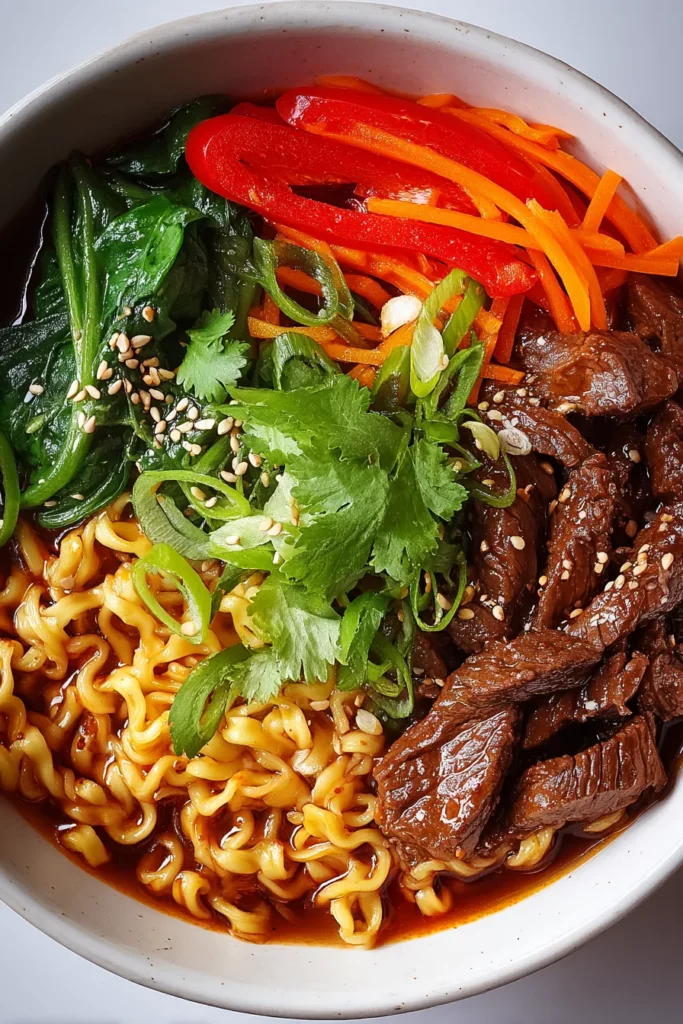

Spicy Korean Gochujang Beef Noodles
Description
Experience a tantalizing medley of tender beef, vibrant vegetables, and spicy gochujang sauce, all enveloped in chewy noodles. It's a delicious adventure for your taste buds!
Ingredients
Instructions
-
Cook the noodles according to the package instructions, drain, and set aside.
-
In a small bowl, whisk together the gochujang, soy sauce, sesame oil, rice vinegar, brown sugar, garlic, and ginger to create the sauce. Adjust the level of spice to your preference by adding more or less gochujang.
-
Heat the vegetable oil in a large skillet or wok over medium-high heat.
-
Add the sliced beef and cook until browned on all sides, about 4-5 minutes. Remove the beef from the skillet and set aside.
-
In the same skillet, add the red bell pepper and carrot. Stir-fry for 2-3 minutes until they begin to soften.
-
Return the cooked beef to the skillet. Add the sauce and stir to coat the beef and vegetables evenly.
-
Add the cooked noodles and gently toss everything together until the noodles are heated through and fully coated with the sauce.
-
Stir in the chopped green onions and baby spinach, cooking until the spinach wilts slightly, about 1-2 minutes.
-
Transfer the noodles to serving plates and garnish with sesame seeds and fresh cilantro if desired.
Note
- Gochujang is available in most Asian grocery stores; adjust the quantity to suit your heat tolerance.
- For extra protein, consider adding tofu or a fried egg on top.
- You can substitute other vegetables like bok choy or snap peas for variety.
- This dish pairs well with a light and refreshing cucumber salad.
- Leftovers can be stored in an airtight container in the refrigerator for up to 2 days.